Project Payments, Secured by Escrow
Stoze is a licensed escrow service that holds project funds in an FDIC-insured account, releasing payment as work is completed and approved.
Workflow Breakdown
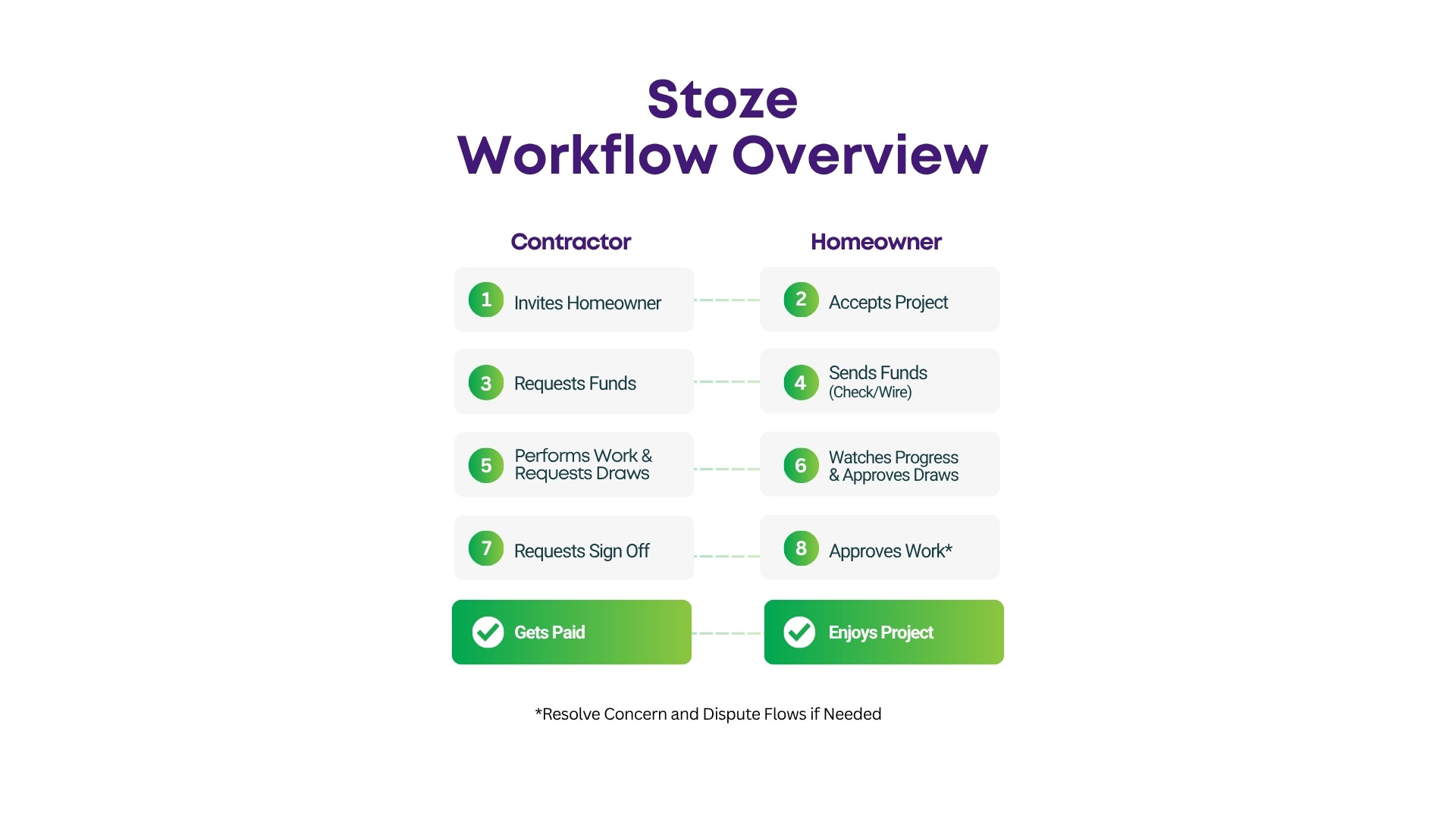
Contractor invites homeowner.
Homeowner accepts project to reserve spot on schedule.
Contractor requests funds before starting.
Homeowner sends funds using check or wire. Money is put in a "Hold" position.
Contractor performs work.
Homeowner watches work and communicates in Stoze PWA app.
Contractor requests Sign-Offs for draws or completion as work is done.
Homeowner approves or questions work performed. 14 day auto-approve if non-response.
Upon Approval Funds Release. Upon concerns expressed parties resolve together in documented flow.
Contractor collects and homeowner enjoys project.
How Sign-Offs Work
Sign-offs are the checkpoints where completed work is reviewed and funds are released. Every project uses them — how they're structured is flexible.
Work Item Sign-Offs
Individual pieces of work are approved as they're completed. Each approval releases the funds tied to that item.
Draws
Partial payments released as work progresses, so payment keeps pace with the project instead of waiting for the end.
Final Project Sign-Off
The last checkpoint confirming all work is complete — releasing any remaining funds and closing out the project.
Grouped Sign-Offs
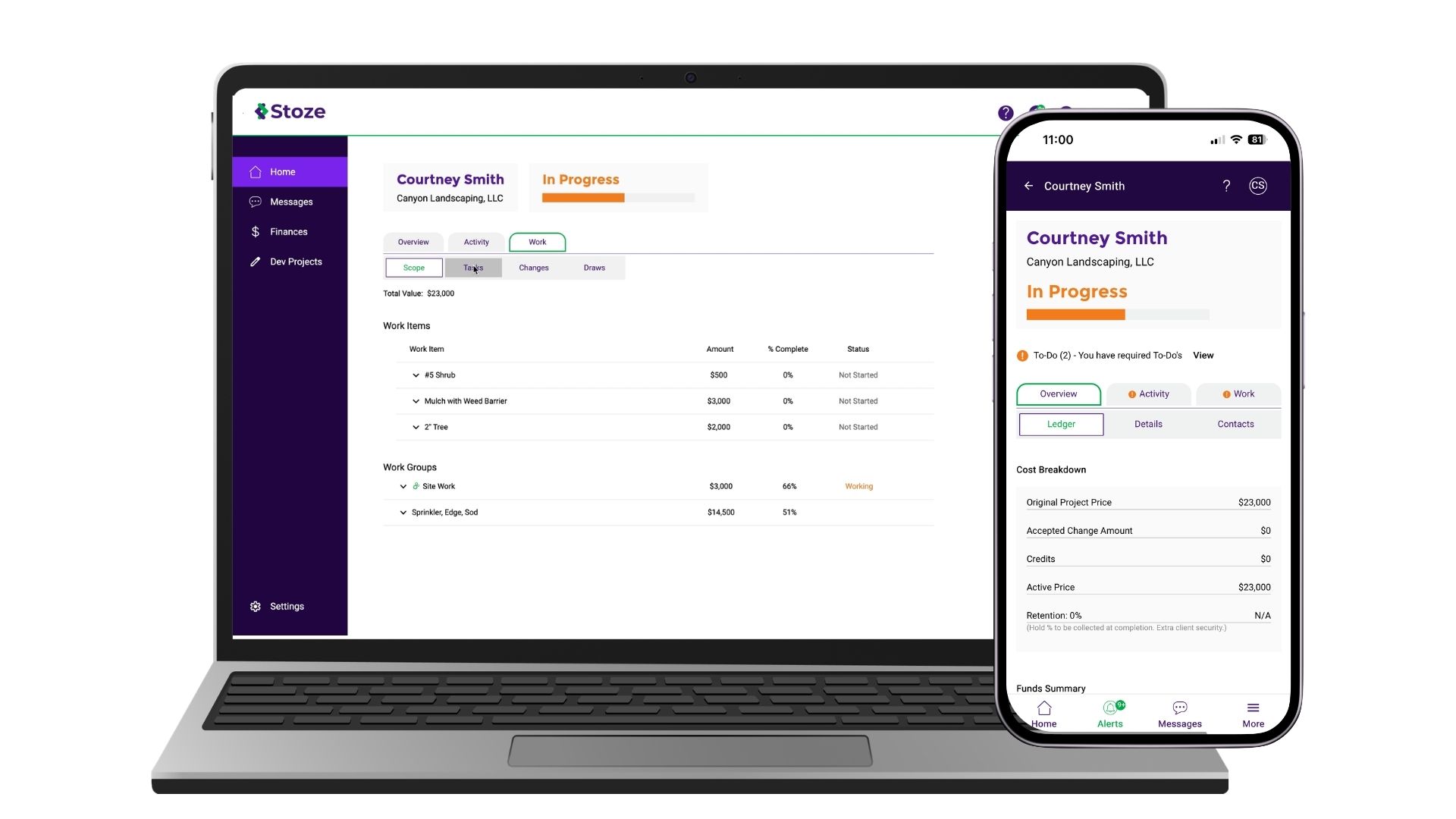
Work items can be grouped into scope sets, so related items are reviewed and approved together in a single sign-off — as detailed or as consolidated as the project calls for. A landscaping project might group sprinklers, edging, and sod into one sign-off, while a deck build is handled as another.
Retention
A portion of draw payments held back until work is fully signed off. If no project retention is set, a default 5% is held on each drawn work item and releases when that item is individually signed off. If the contractor sets a project-level retention, it's held through Substantial Completion and releases when the final completion sign-off is accepted.
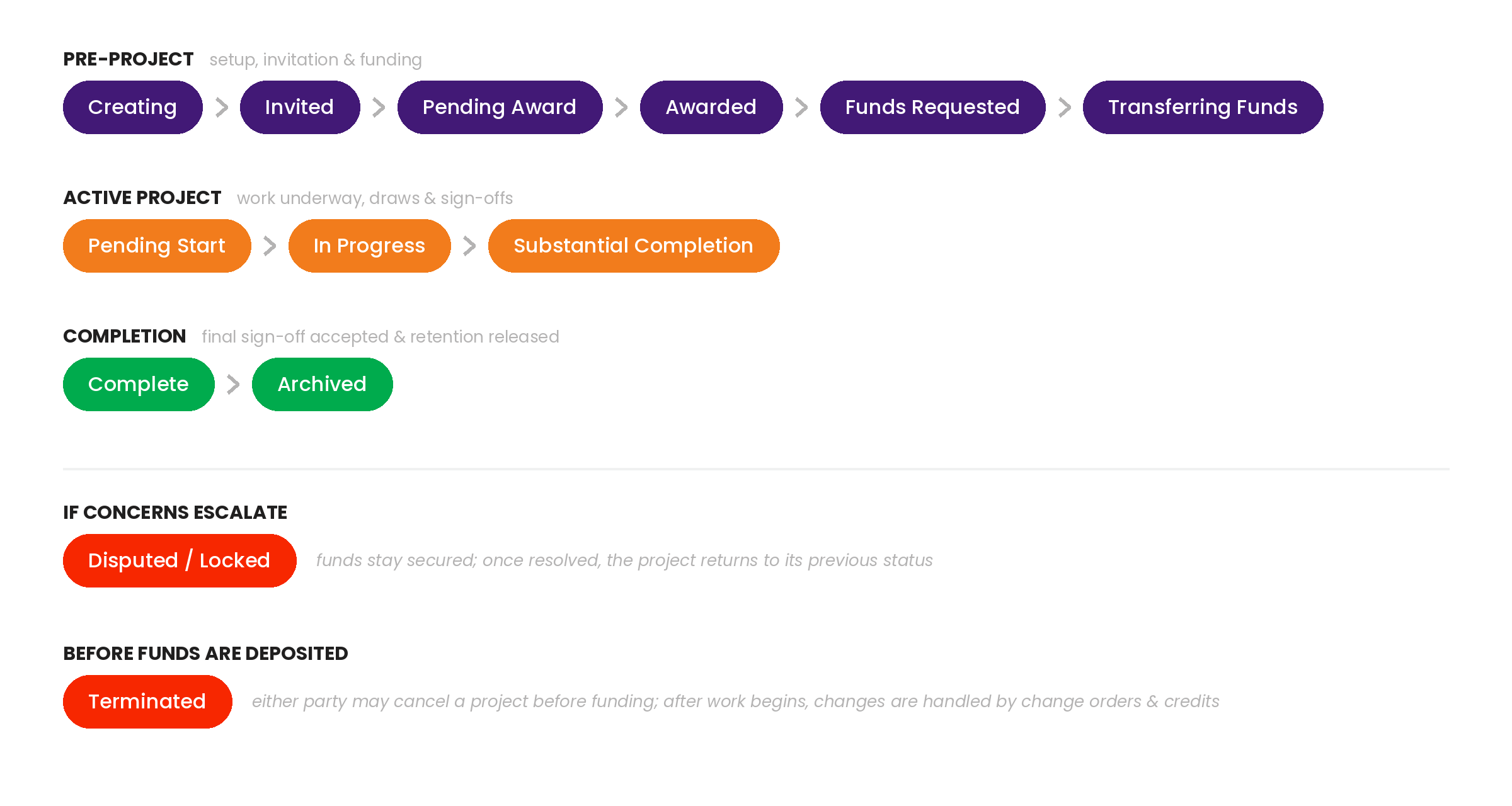
Project Status at a Glance
Every Stoze project moves through clear statuses, visible to both parties at all times. From invitation through funding, active work, and final completion — everyone always knows exactly where the project stands.
Frequently Asked Questions
How do funds get into Stoze?
By check or wire, sent directly to Stoze. When the contractor requests funds for a milestone, the client receives instructions for sending payment. Once funds arrive, they're held securely in escrow and the project moves to Pending Start — the contractor can see the money is in place, and work can begin.
When exactly do funds move?
Funds move twice: into escrow before work begins, and out to the contractor when work is approved. Between those two points, money sits in an FDIC-insured trust account — visible to both parties, touchable by neither. The project ledger stays current throughout, so everyone always knows exactly where every dollar stands.
What is the 14-day auto-approval?
When a sign-off is requested, the client has 14 days to approve or raise a concern. If no action is taken, the work auto-approves and funds release. This protects contractors from unresponsive clients while giving clients ample time to review — and any concern raised within the window pauses the release.
What if the project scope changes mid-project?
Change orders are built in. Work items can be added, modified, or removed during the project — the client reviews and approves changes before work proceeds, and funding adjusts accordingly. No side agreements, no surprises at the end.
What happens if there's a concern about completed work?
Instead of approving a sign-off, the client can flag a concern. Funds stay secured while both parties work through it in a clear, documented process. Most concerns are small and resolve quickly — addressing them early is exactly what keeps them from becoming disputes.
What happens if there's a dispute?
Concerns that can't be resolved move through a progressive resolution process with multiple documented opportunities to work things out while funds stay secured. Only after those steps are exhausted can either party trigger binding arbitration — forcing a fair outcome without lawsuits, attorney fees, or indefinite payment holds.
Can Stoze decide who's right in a disagreement?
No. Stoze is a neutral third party, not a judge. It facilitates structured communication and documentation, but final disbursements follow joint written instructions, mediated settlements, arbitration outcomes, or court orders. That neutrality is what makes the process trustworthy for both sides.
What happens if a project is cancelled?
Either party can cancel before funds are deposited. Once funded, the project moves to Pending Start, and once work begins, the project itself can't be cancelled — but the same outcome can be reached through change orders and credits, initiated by the contractor based on the agreement with the client.
Does Stoze create a contract between contractor and client?
No. Stoze manages the payment process — it doesn't form or replace the agreement between the parties. Contractors can attach their contract to the project documents so it's on hand for reference throughout the project.
What does Stoze cost the client?
Clients don't pay Stoze directly — Stoze's 1% fee is charged to the contractor as funds are released. Like insurance, equipment, or other costs of doing professional work, contractors may account for it in their general conditions or list it as a project line item.
About Us
Get In Touch
© Copyright 2026 Stoze LLC. All rights reserved.